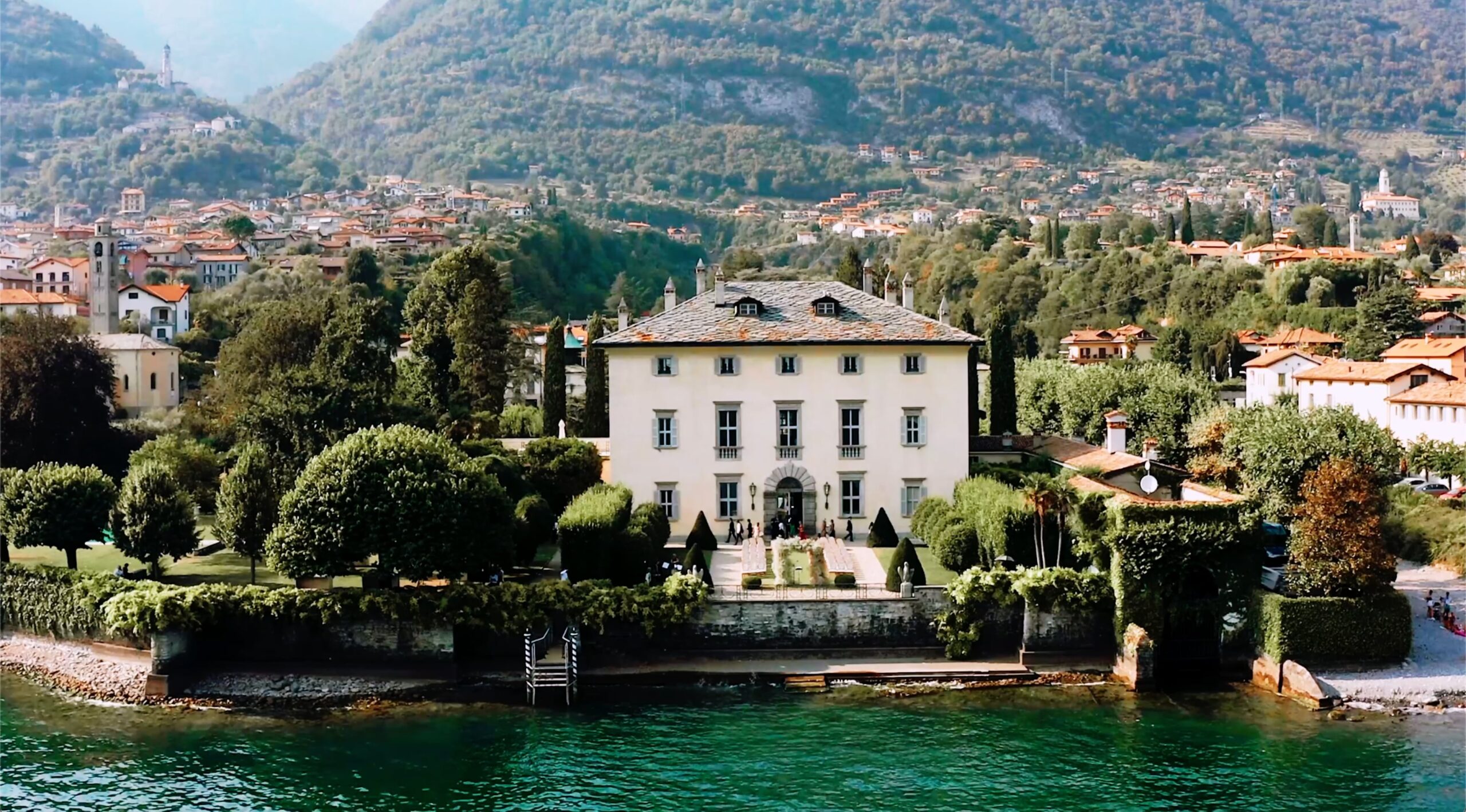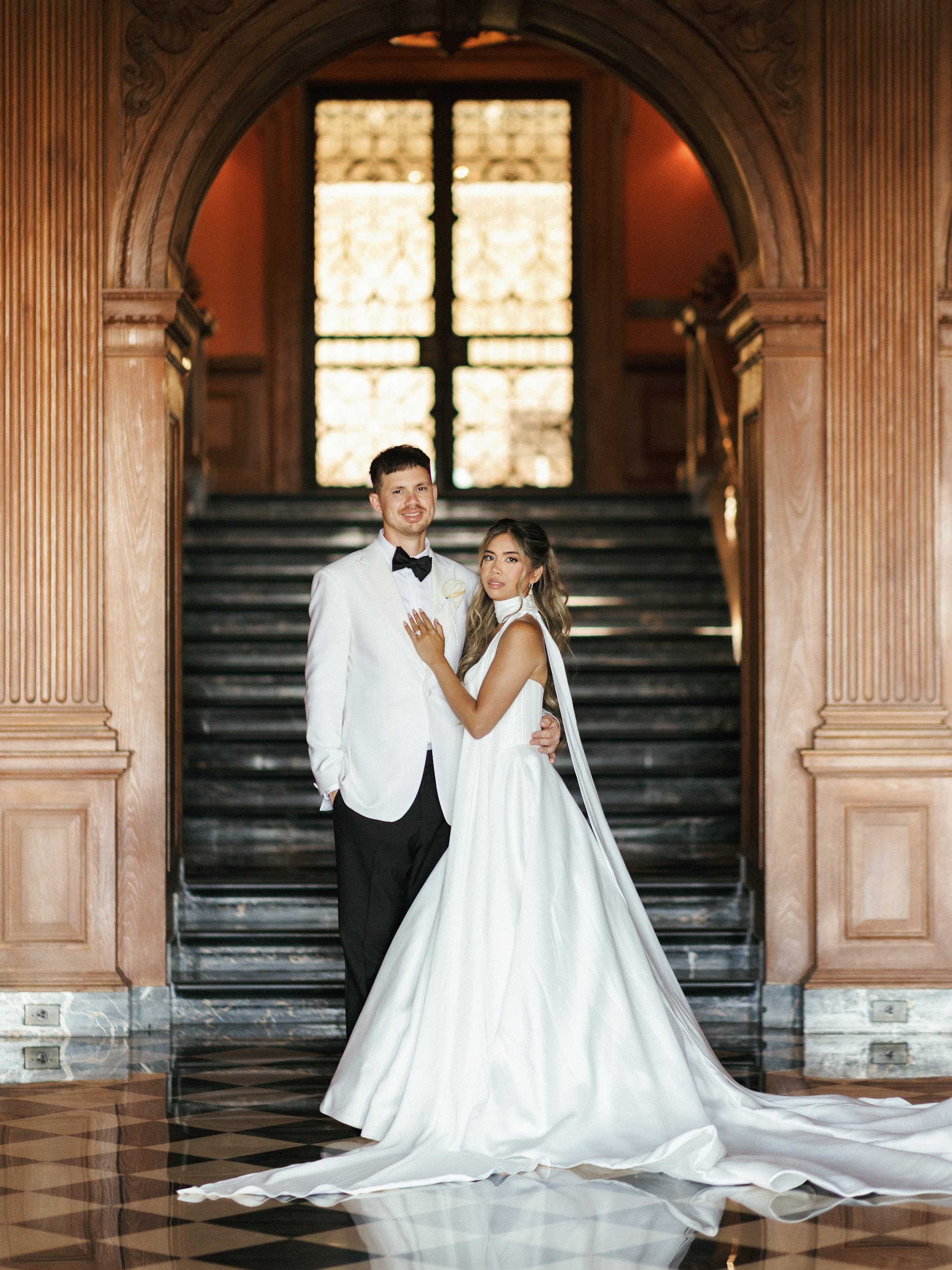
Consider the sequence of spaces
A venue becomes part of the story through more than its best-known backdrop. Think about where you will prepare, how guests arrive, where the ceremony takes place and how everyone moves into the reception.
Share those spaces with the photography and film team. Walking routes, travel between locations and access for preparations can affect the practical coverage plan as much as the appearance of an individual room.
Talk about light and the working timeline
Ask the team to consider the spaces alongside your proposed schedule. Portraits, the ceremony and the reception can each call for a different approach to the light already present.
Discuss any darker areas and the arrangements for speeches or evening events. Additional lighting may help record those moments clearly, while the approach should still support the atmosphere you have chosen.
Understand the practical arrangements
Confirm current arrangements with the venue and share the answers with your team. Aerial footage depends on permission, conditions and the practical restrictions applying to the location; a setting alone does not make a flight part of the plan.
- Where photography and film teams can access preparation spaces.
- How the ceremony and reception areas will be arranged.
- Where family photographs can happen without blocking guest movement.
- Who coordinates microphones and the venue sound system.
- What the alternative spaces are if the outdoor plan changes.
- Which venue rules affect equipment, lighting or aerial coverage.
Review complete stories in different settings
A complete wedding collection can show you how the team handles the ceremony, portraits, family and reception as a connected story. Look at the work across different kinds of light and spaces, rather than judging only one striking photograph.
Your own collection will be shaped by your location, people and schedule. References are useful when they help you explain what you value and the atmosphere you hope to keep.